Life is moving fast in the urban potager this week. During a routine morning weeding of the organic vegetable beds, I discovered that I must have left some purple potatoes in the ground when harvesting last year. I have discovered 4 new plants adding to my roster of volunteers for spring training. Now I need to research how to care for them. I've transplanted all four plants to one end of the bed in a deep hole that I will fill in as the plants continue to grow ever upwards. One of these days I want to try the barrel method of planting, where I start them in a deep container, fill in as needed with more growing medium, whether it be dirt or potting mix or both, and merely tip over the container when the potatoes are ready to harvest.
Showing posts with label Vegetables. Show all posts
Tuesday, April 7, 2009
Tuesday, March 31, 2009
Another Tomato Experiment
After years of testing tomato cultivars in my San Francisco garden, I am well aware that cherry tomatoes are the most successful and rewarding type for our climate and foggy summers. But this is yet another attempt to try to grow a beefsteak tomato in this coastal climate. I shutter at the thought of buying plants at "big box" stores because I know full well they often offer plants that are inappropriate to our area. Still, when I saw 2 foot tall tomatoes at Costco, I just had to give them a try. They were selling 3 different varieties for under $10 per 3-pack (a penny under...who's fooling who?). Even though one was Early Girl, a tomato I don't even think is worth buying, I bought a pack for the other 2 types that were included, a beefsteak and Black Krim.
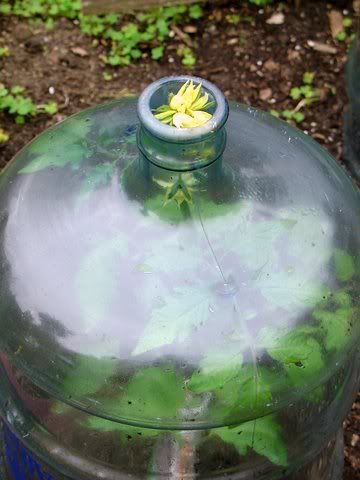
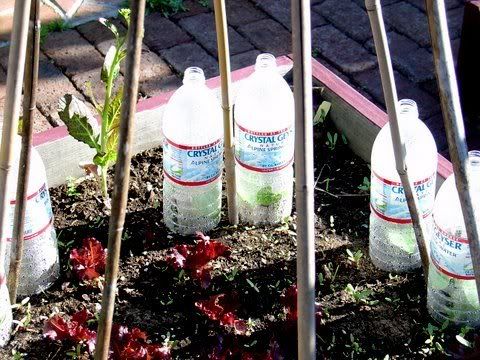
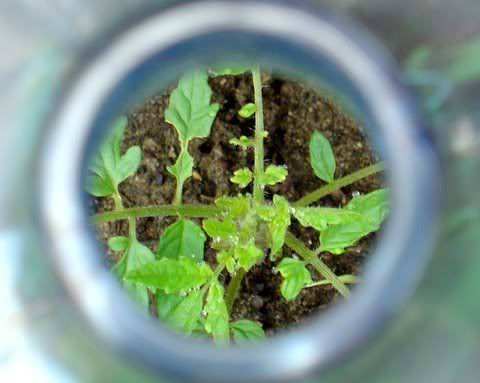
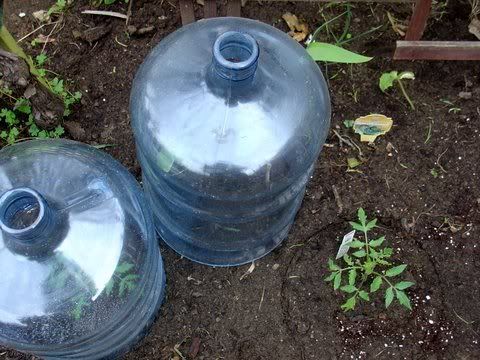
My thought is that if I can plant a tomato this early in the season, that is already that mature, it may be my best shot for a cultivar that usually takes 85 to 90 days to mature. As you can see, they are already too big for my makeshift cloches after 2 weeks, but the weather is starting to warm up and I remain hopeful.
Monday, January 12, 2009
What Ever Happened to That Mesclun Mix?
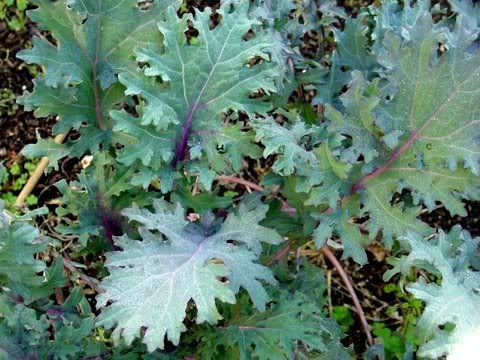
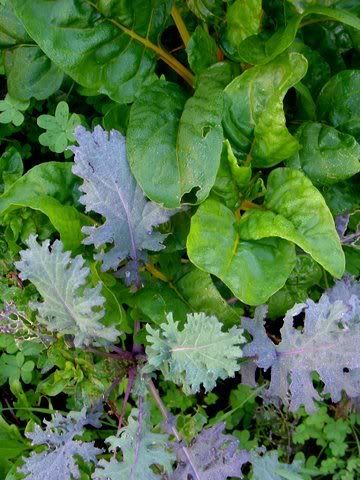
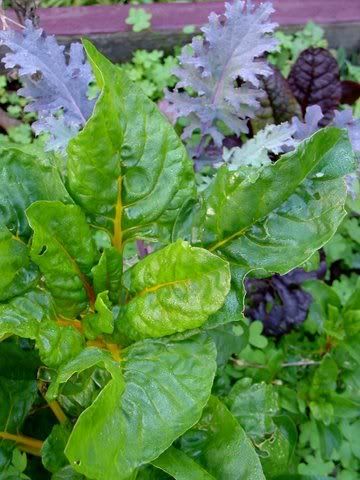
Most of it didn't even get eaten, except by insects, but went to seed. The red mustard and arugula bolted very early on. Part of the duty of every home gardener is to make sure what is sown is nurtured until it meets an untimely death in the kitchen. Sometimes that just doesn't work out, but I did manage to transplant the Russian Kale and it had a chance to overwinter and thrive in the Winter garden along with some Swiss chard. Not wanting to see it escape yet again, I gave some to friends, because if the truth be known, I've never cooked kale before and really don't know what to do with it, beyond adding it to a soup.
Monday, November 17, 2008
No Head for Cauliflower
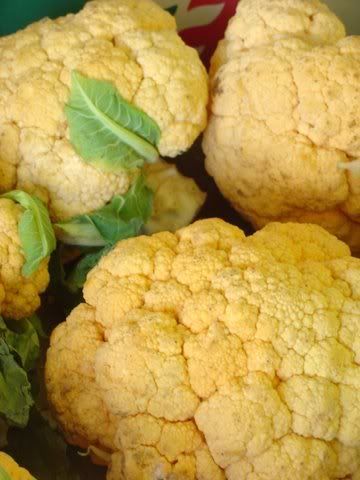
This was my first attempt at growing cauliflower...an abysmal failure at aesthetics. However, once the leaves and "flower" were chopped and sauteed, it was not the disaster it appears to be. If you're gardening for a small amount of food production, you have to put your pride aside and accept that people are not born with green thumbs, but develop them through trial and error. Since eating is the primary purpose of growing vegetables, this first attempt at cauliflower was a small success. Next year I try for a later planting date since I jumped the gun on this one. The cultivar I chose to grow was Cheddar, a yellow orange cauliflower that is said to have a higher protein level than any other cauliflower. It's probably negligible since cauliflower, along with most vegetables, is packed with carbohydrates. Still, it's pretty (or should be) and I developed a soup recipe for it.
Update:
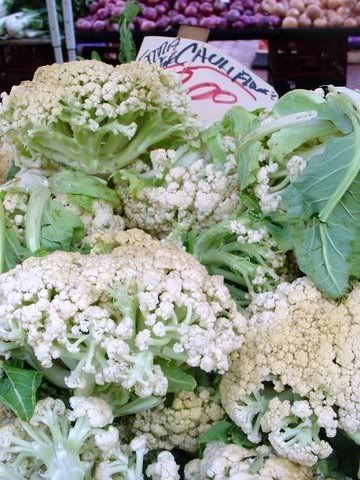
Here is the way Cheddar should look. After posting this originally, I went to Civic Center Farmers' Market (January 2009) and photographed cauliflower that was being offered for sale. Look what I found! Even professional growers can have their cosmetic challenges.
Wednesday, August 27, 2008
Quintas, The Perfect Bean
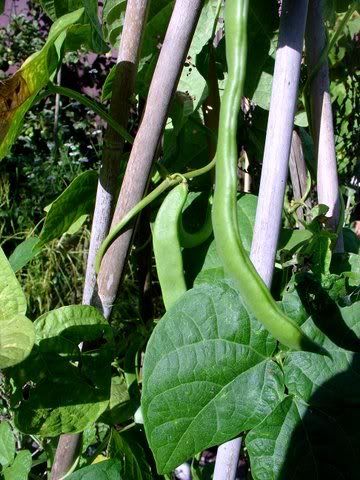
This photo may be all the proof that anyone needs to try this buttery, tender pole bean. As it does every planting, Quintas has come through again as my favorite pole bean. The more you harvest the more you get; that seems fair. This photo has not been manipulated to fit on the page, so the lengths this bean will go to, to please, is quite evident! I must plant larger amounts of seed next Spring, as there never seem to be enough Quintas to satisfy my appetite for this Italian style, green bean, even though the plant is prolific.
Sunday, June 1, 2008
Quintas, The Best Flat Pole Bean
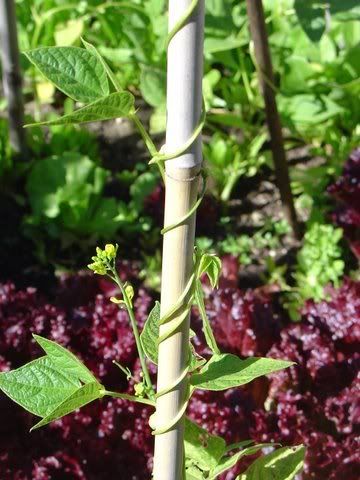
Cooks Garden used to sell the Quintas flat bean and based on their description I bought a pack of seeds. It has been my favorite bean ever since. A buttery taste is the best feature of this pole bean for me, but for countless others it is the fact that it does not get tough throughout the growing season, but stays tender. That's an admirable trait for a bean. My preference for pole beans may have something to do with space issues. When you have a small garden, vertical planting is a good way to make the most of your space, it also adds a nice architectural element of the garden.
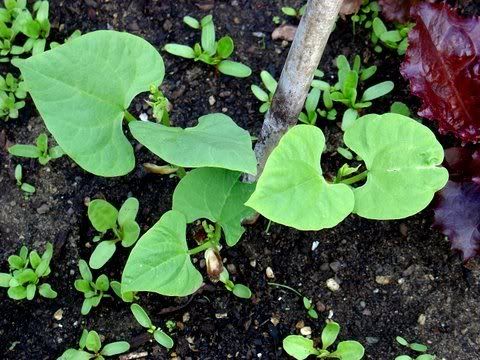
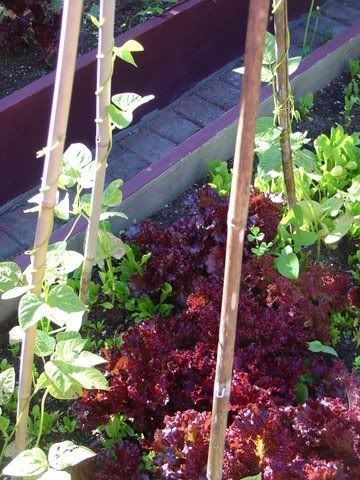
As usual the beans were planted in early spring, then covered with mini cloches made of 1 liter water bottles. This not only kept the ground warmer for quick growth, but kept predators away from my precious plants. When the bean plants leafed out and grew 4-5 inches tall, they were uncovered and left to find their way up the poles into the sunlight. They're doing a good job of that.
Tuesday, April 29, 2008
Transplant Shock
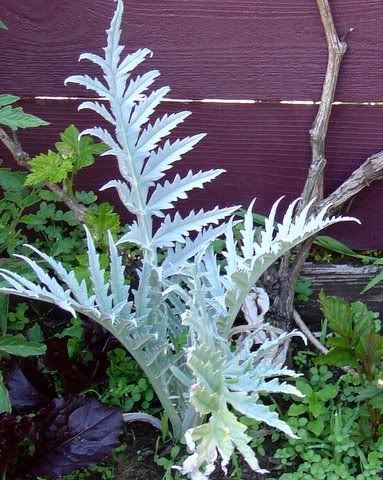
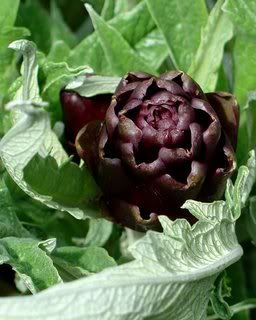
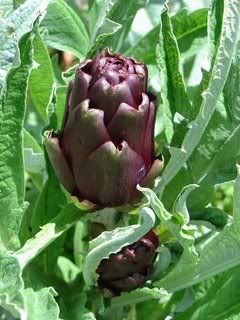
Even though the transplanted Violetto artichoke plants seem to be thriving, it may have been too much stress on the plants. No signs of artichokes on any of the transplants, even the parent plant is barren, so far. It seems too late in the season for them to start now, so I'm germinating more seeds and plan on taking good care of them in hopes of getting artichokes next year. Weeding and mulching need to be done and a rich compost top dressing should help with nutrients. Too bad, I'll miss seeing the artichokes that are pictured below.
Waste Not, Want Not
Liter sized plastic bottles are so useful in the garden. After planting pole beans and setting up the tepee trellis for them to climb, it only took a week or so for the beans to germinate. When they started getting their first true leaves, it was apparent that something was eating them. I haven't seen many snails this year, but there are some slugs and earwigs around. To create a barrier until the plants got stronger, I cut out the bottom of the bottles and placed them around the individual bean plants. Forcing them into the dirt by one inch gave them enough stability to withstand being blown over by the wind. The added heat should help the plants grow faster, creating an additional benefit.
To economize on space, I planted some volunteer Merlot and Lollo Rosso seedlings in the center of the tepee. They should be mature by the time the beans grow tall and full enough to shade them completely. I find most leafy greens do well and resist bolting in semi shady areas. It has also been my experience that woody herbs, such as rosemary and sage, when planted in shady areas have more intense fragrance, and therefore more flavor.
Tuesday, March 11, 2008
I'll Take Purple Osaka Mustard, Hold the Mayo
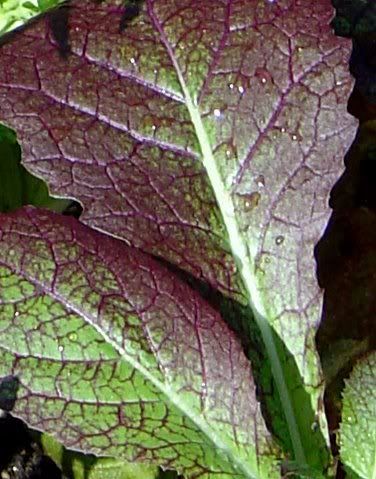
Purple Osaka mustard is one of the "let's take a chance on this one" seed purchases that really panned out for me. I love using it in place of a spreadable mustard on sandwiches. It's got a permanent place on my "leafy greens for salads" list too. Besides being beautiful and offering some delightful color to my raised beds it can be harvested when young for salads or when it gets much bigger for the aforementioned sandwich garnish. You might try cooking it too, but for me it's at its best raw.
Monday, March 10, 2008
Another Great Trick For Tomatoes
Since San Francisco can fail to have enough consistent heat for larger tomatoes, I usually content myself with short season varieties and cherry tomatoes. They are the perfect solution since they mature and start fruiting in 52 - 65 days from the transplant date. But I secretly long for cultivars like Hawaiian Pineapple, Purple Calabash, and the larger variety of paste tomatoes. What to do? If I set tomato plants out too early they do not have enough heat to thrive and will end up becoming weak plants. If I wait for the optimum time, they suffer in our foggy late summer weather.
I priced "Wall O' Water" and it was too expensive for the number of plants I wanted to grow. I tried building little tents with plastic sheeting, but they were awkward and blew over in a gusty wind. One day as the water delivery man walked into work, I realized that he was carrying the answer to my dilemma over his shoulder. I asked how much the water company charged for bottles and it was reasonable enough for me to consider buying a few for a test. I had the bottoms cut off by a friend and tried them as cloches.
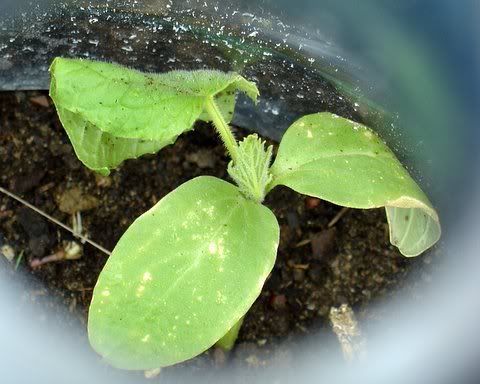
Last Spring I used them on several tomato plants and indeed, they grew very well and faster than their counterparts that had to fend off the cold without any help. This year I'm being more scientific in my testing and trying them on identical cultivars to see if the protected plant outgrows its twin. The test is also being conducted on a Japanese cucumber and when the seedling germinates, a melon.
Wednesday, March 5, 2008
All Volunteer Army....of Plants!
All recruits unconditionally accepted and no signing bonuses to pay. You have to love a volunteer! The first time I heard the term was in Papa's little victory garden. Nana and I were taking a look around and she pointed to a very healthy looking tomato plant and said, "and that's a volunteer tomato". I had no idea that it had sprung up on it's own, but instead thought it was the name of the tomato variety.


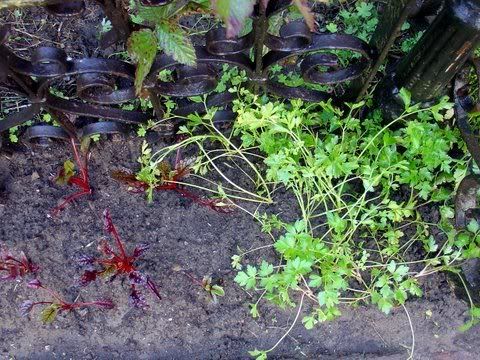
The top left photo is of red chard and parsley, all from plants that went to seed last November. I was very happy to plant them along an old Victorian iron fence that sits between the cherry tree and the raised beds in the garden. That space has gone unused for far to long. It's heavily shaded but both plants should do fine there.
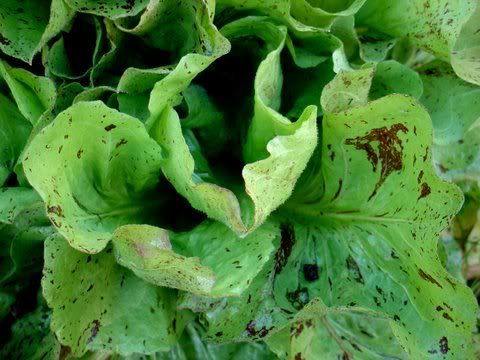
The top right photo is of a radicchio I planted last summer, but never harvested. It became tough so I just left it to die back; it did along with several others. Now they're all resprouting, so I may be investigating a Tuscan and radicchio soup very soon.
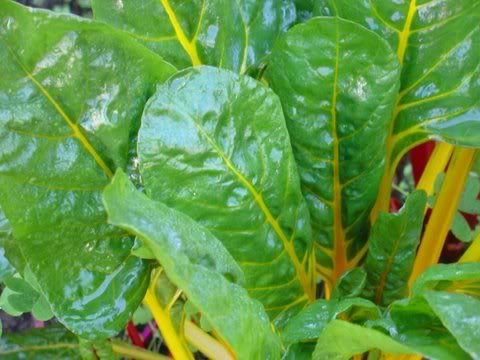
The Yellow chard grew back after it was cut all the way to the root. The most surprising volunteer on the bottom right is a purple potato from last year. I dug that patch up so well I can hardly believe I overlooked 3 potatoes, but 3 there were, since I now have 3 volunteers.

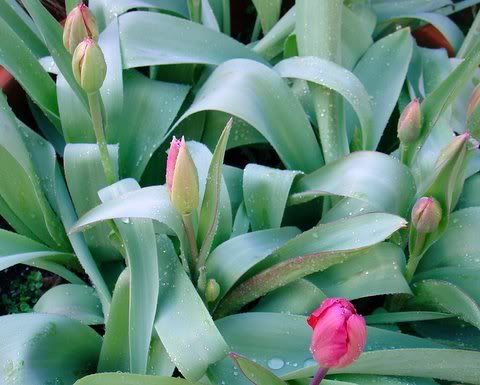
Not all volunteers are rough and ready recruits. These delicate tulips were planted 3 seasons ago. Last year they only leafed out, so I had planned to replace them this year, but never found the time. Lucky for me that I didn't. They're called Pink Impression. I'm certainly impressed.
The top left photo is of red chard and parsley, all from plants that went to seed last November. I was very happy to plant them along an old Victorian iron fence that sits between the cherry tree and the raised beds in the garden. That space has gone unused for far to long. It's heavily shaded but both plants should do fine there.
The top right photo is of a radicchio I planted last summer, but never harvested. It became tough so I just left it to die back; it did along with several others. Now they're all resprouting, so I may be investigating a Tuscan and radicchio soup very soon.
The Yellow chard grew back after it was cut all the way to the root. The most surprising volunteer on the bottom right is a purple potato from last year. I dug that patch up so well I can hardly believe I overlooked 3 potatoes, but 3 there were, since I now have 3 volunteers.
Not all volunteers are rough and ready recruits. These delicate tulips were planted 3 seasons ago. Last year they only leafed out, so I had planned to replace them this year, but never found the time. Lucky for me that I didn't. They're called Pink Impression. I'm certainly impressed.
Tuesday, March 4, 2008
Spring Is In The Air
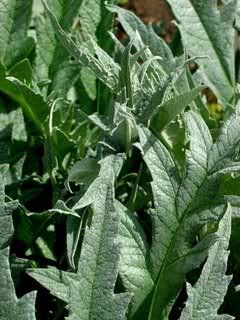
My first indication of Spring in San Francisco is always the leafing out of my Violetto artichoke. It's been returning for at least 5 years and each Spring I keep hoping that this will be the year it produces more than one large artichoke. For 2008 I'm going to be more proactive in that effort and will top dress it with a good dose of compost. It may also need dividing.
Subscribe to:
Posts (Atom)